
Our services
Sports Imaging
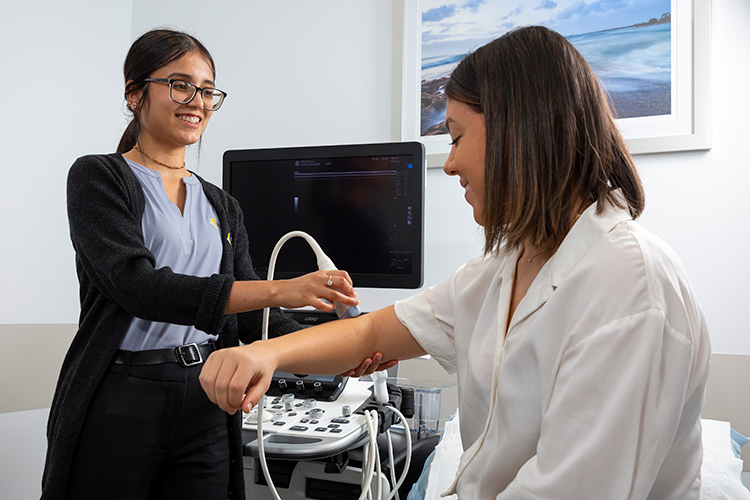
Sports Imaging is the branch of radiology which caters for the musculoskeletal imaging needs for athletes of all shapes and sizes, ranging from the professional athlete, serious marathon runner, recreational jogger and people who simply wish to improve their general fitness.
What is Sports Imaging?
Though the health benefits of regular exercise are well known, sporting pursuits often result in injury.
Sporting injuries are generally divided into two main groups:
- Those which are due to overuse i.e. repetitive action, such as tendinosis, arthritis and stress fractures
- Those which are traumatic, such as a shoulder dislocation, or fracture.
Following a clinical assessment by a doctor, many athletes require some form of imaging to confirm the suspected diagnosis and assess its severity. At Apex Radiology we provide a full sports imaging service including general X-Ray, CT, MRI, ultrasound and interventional procedures for acute and chronic musculoskeletal injuries and ailments.
Our expert radiologists, many of whom enjoy sport, understand the complexities of musculoskeletal sports injuries and have the necessary expertise to deal with all facets of sports medicine imaging and image guided intervention whether common or rare. If you are a health care specialist needing expert advice about the best imaging modality for your patient, simply call one of our radiologists to discuss specifics.
Once a diagnosis has been made, imaging guided treatment, also known as interventional radiology, may be required, such as a cortisone injection into an inflamed joint. Such procedures are performed at Apex Radiology either with the use of ultrasound or CT fluoroscopic guidance.
Sports Imaging Scans
Common modalities for sports imaging include:
Pain Management Procedures Offered
CSI
Cortisone and Steroid injections combine hydrocortisone and a long-acting local anaesthetic, to act as a powerful anti-inflammatory.
It can be injected into areas of concern causing pain and inflammation.
For sports injuries and pain management, Cortisone and Steroid injections will reduce or eliminate pain associated with:
- Bursitis
- Arthritis and joint degeneration
- Nerve pain, including spine and carpal tunnel
- Tendonitis and tenosynovitis – plantar fasciitis, trigger finger, de Quervain’s, tennis and golfer’s elbow
- Frozen shoulder – adhesive capsulitis
- Ganglion cyst
Depending on the area of pain, CT, fluoroscopy or ultrasound is used to ensure the needle delivering the treatment is exactly within the area suspected of causing pain to maximise pain relief. When a fluid collection is present (such as a ganglion), fluid might be removed to relieve distension before cortisone is injected.
Cortisone is a legal steroid medication.
Nerve Block
People who suffer acute or chronic spine pain affecting the neck, buttocks, legs or arms might benefit from a nerve block injection to achieve temporary pain relief.
A nerve block is used to treat a particular nerve or group of nerves by injecting an anaesthetic or anti-inflammatory agent, which will switch-off pain signals or decrease inflammation.
CT or fluoroscopy is used for needle guidance, to ensure the needle is correctly placed to maximise pain relief.
Epidural Steroid Injections
Epidural steroid injection is the accurate placement of a very thin needle, at a given level in this space, to inject a steroid and long-acting local anaesthetic. This is performed under the guidance of CT or X-ray as image guidance enables greater accuracy in delivering steroid treatment to the appropriate spinal region.
Your doctor may have referred you for an Epidural if you are suffering from severe or prolonged (chronic) back pain, pain as a result of disc or facet joint problems, or recurrence of back pain after surgery.
Our specialist trained Radiologist will perform this procedure with a nurse.