
Our services
Interventional Radiology
Interventional Radiology is an exciting area of modern medicine delivering precise, targeted treatment for complex diseases and conditions throughout the body.
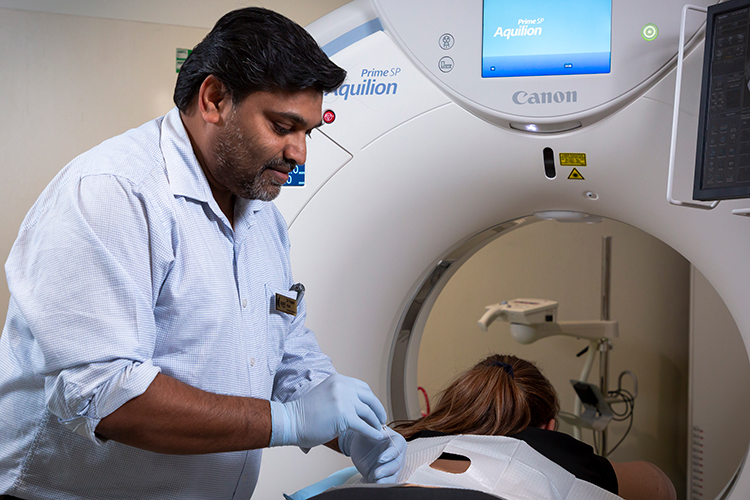
What is Interventional Radiology?
Interventional radiology can be used to diagnose and/or treat many conditions that once required surgery.
CT, fluoroscopy, mammography, MRI or ultrasound is used to guide a small needle or catheter (a narrow tube) for placement.
There are many advantages of interventional radiology:
- Minimally invasive
- Most procedures can be performed on an outpatient basis
- General anaesthesia is usually not required
- Reduced risk of infection and pain
- Significant reduction in recovery time
- Cost is much less compared with surgery
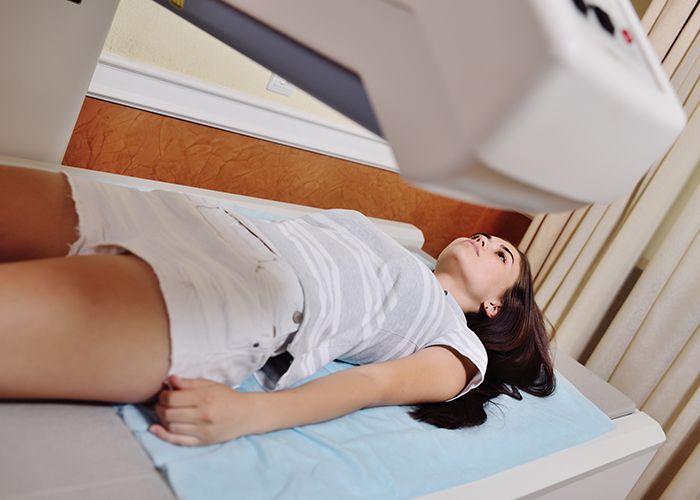
Types of Interventional Procedures
At Apex Radiology we offer a range of interventional procedures.
Some of these include:
Under image guidance using ultrasound or CT, a needle or catheter is placed within the chest or abdomen to drain abnormal fluid collection.
You must remain very still while the fluid is being drained and remain in the department after the procedure for observation.
Abnormal breast tissue is usually detected by physical examination, ultrasound or mammography. However, imaging tests can’t always differentiate benign lesions from cancer, and so FNA and core biopsy are used to define the true nature of abnormal areas found on ultrasound or mammography.
For FNA a fine needle is inserted under ultrasound or x-ray guidance into the abnormal area, whereby the cells are aspirated for viewing under a microscope. Some solid lesions may benefit from core biopsy.
FNAs and core biopsies are carried out by a speciality radiologist, and will we have an expert pathologist onsite during these procedures to ensure an adequate sample has been obtained.
People who suffer acute or chronic spine pain affecting the neck, buttocks, legs or arms might benefit from a nerve block injection to achieve temporary pain relief.
A nerve block is used to treat a particular nerve or group of nerves by injecting an anaesthetic or anti-inflammatory agent, which will switch-off pain signals or decrease inflammation.
CT or fluoroscopy is used for needle guidance, to ensure the needle is correctly placed to maximise pain relief.
Steroid injections are used to relieve acute or chronic pain.
A combination of hydrocortisone and long-acting local anaesthetic is injected into or around a bursa, joint or nerve depending on the cause of pain.
CT, fluoroscopy or ultrasound is used for needle guidance, to ensure the needle is correctly placed to maximise pain relief.
About Your Test
Before your appointment
We will provide you with detailed information about the procedure your doctor has requested, when you make your appointment.
Please bring any relevant medical images with you, so we can review your medical information beforehand.
There is usually a specific preparation required for interventional procedures and this will be discussed with you at the time of booking.
On the day of your procedure, one of our staff will explain the procedure to you in detail and give you the opportunity to ask any questions.
You’ll be asked to read and sign a consent form before the procedure.
Depending on the region of interest and the imaging modality, you may be asked to remove jewellery, or clothing with metal clips, zips or buttons as these show up on x-rays.
If you need to remove any clothing you will be given a gown to wear.
On the day
You will lie on a bed in a position that enables optimal visualisation of the area of interest, and you may be asked to hold your breath for a few seconds, to reduce movement.
The length of the examination varies on the procedure and the body part, but you should expect to be with us for between 30–60 minutes.
If you need a more specific time, ask the person who books your appointment.
The needle or catheter insertion might cause some discomfort.
If the radiologist believes it will reduce your discomfort, a local anaesthetic could be given.
Our staff will make every effort to minimise any potential pain.
It is very important that you inform our staff if you feel uncomfortable or are in pain prior to and during the procedure so we can make you as comfortable as possible.
You’ll notice staff in the room during CT and fluoroscopy wear lead gowns and sometimes neck and eye protection to reduce their exposure to radiation.
After your appointment
If the procedure you had was aimed at reducing pain, you will be given a pain assessment form to complete during the next 10 days.
Take this with you next time you see your doctor.
You might need to remain in the x-ray department for a short time after your procedure, for observation.
For some procedures you may need to have someone else to drive you home.
This information will be provided when you make your appointment.
The radiologist who performed your interventional procedure will write a report about the procedure and send that to the doctor who referred you.
You will need to return to the health practitioner who referred you to discuss the report and the effectiveness of the procedure.
Frequently Asked Questions
Preparation will depend on the type of procedure, but our friendly booking staff will advise you when you book your appointment. Please be sure to bring along any previous x-rays, CT scans, ultrasound or MRI examinations which you may have available. They provide valuable additional information to the attending Radiologist performing your procedure. All imaging will be returned to you.
At the time of the procedure on the day, our healthcare team will discuss the detail of what will happen during the procedure.
Each procedure is different and the time may vary depending on complexity.
Prior to your scan and to ensure optimal imaging, you may be asked to change into a gown. A change cubicle will be provided to ensure your privacy and you will be asked to bring your belongings will you, carry baskets are provided. You will be asked to place your belongings in a suitable location within the room for the duration of your scan. After your scan, you will be provided with a change cubicle to ensure your privacy. Please ensure you have all your belongings with you prior to leaving the department. If you accidentally leave anything behind, please contact our staff to advise and we will endeavour to locate your belongings and return them to you.
Our friendly reception staff will advise you on the cost of your procedure at the time of your booking. If your exam is Medicare eligible, you will be bulk billed.
Patient Safety
As with most medical procedures there are slight risks involved.
The risks involved in interventional radiology are dependent upon the procedure you have been referred for, however, the benefits will outweigh the risks.